
MCP and Tool-Calling Explained: Why Your Software Vendors Keep Mentioning It
A plain-English guide to the Model Context Protocol (MCP) and LLM tool-calling: how open standards are replacing brittle API integrations and transforming enterprise software.
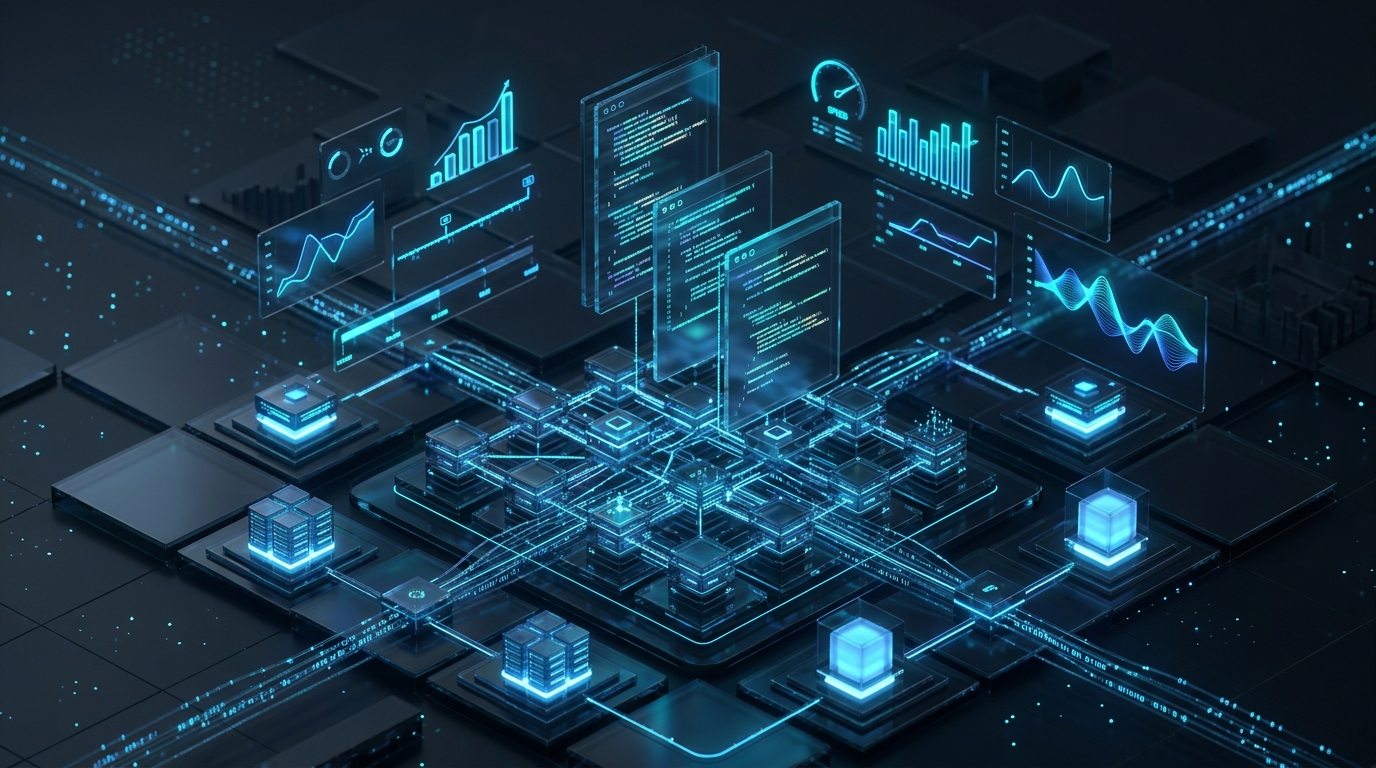
The Model Context Protocol acts as a universal USB-C cable connecting AI reasoning engines to enterprise databases and SaaS tools.
Executive Summary & Key Takeaways
Model Context Protocol (MCP) is an open standard introduced by Anthropic that standardizes how AI models connect to external data and tools.
Prior to MCP, every software vendor had to build and maintain bespoke, custom AI plugins for every different LLM provider.
MCP provides secure, bidirectional communication between local files, databases, APIs, and client applications.
Adopting MCP prevents vendor lock-in, allowing businesses to switch underlying AI models without rewriting custom integrations.
What to Do About This: Action Checklist
1Ask your software vendors whether their AI integrations adhere to open standards like the Model Context Protocol.
2Evaluate your internal company databases: can you expose read-only operational metrics via an internal MCP server?
3Implement strict authentication and rate-limiting on all tool-calling endpoints to prevent automated abuse.
4Consult with our software integration engineers at /services/ai-automation/ to design a future-proof MCP enterprise architecture.
The USB-C of Artificial Intelligence
In late 2024, Anthropic open-sourced the Model Context Protocol (MCP). Within eighteen months, it emerged as the universally recognized standard for connecting AI systems to enterprise data. Tech analysts frequently refer to MCP as "the USB-C cable for AI".
To understand why this is revolutionary, consider the nightmare of web integrations before MCP. If a CRM vendor wanted their software to work with ChatGPT, Claude, and Gemini, they had to build and maintain three completely separate, proprietary plugin architectures. Every time an LLM vendor updated their function-calling syntax, third-party integrations broke. MCP replaced this chaos with an open, standardized protocol.
The Three Components of the MCP Architecture
The Model Context Protocol operates on a clean client-server architecture consisting of three components:
1. MCP Host: The application running the AI interface (such as Claude Desktop, an IDE like Cursor, or an internal company web portal).
2. MCP Client: The protocol mediator that negotiates connections, authenticates requests, and translates model intents into protocol messages.
3. MCP Server: A lightweight program that exposes specific data sources or capabilities via standardized JSON-RPC messages. A server can expose:
- Resources: Read-only data like database schemas, files, or API logs.
- Tools: Executable functions the AI can call (e.g., "createInvoiceInXero" or "queryPostgresDatabase").
- Prompts: Pre-configured prompt templates optimized for specific workflows.
Deconstructing Tool-Calling: How the AI Takes Real Action
People often wonder: "How can a text model actually update my database?" The answer is tool-calling (function calling):
1. Schema Declaration: When a user initiates a conversation, the MCP host provides the LLM with a list of available tools formatted in JSON Schema (e.g., "bookCalendarSlot", with parameters: date, time, customerName).
2. Intent Recognition: The user asks: "Book a consultation with John tomorrow at 2:00 PM." The LLM realizes it cannot book a slot with text alone. Instead of generating a conversational reply, it emits a structured tool call payload:
{"tool": "bookCalendarSlot", "arguments": {"date": "2026-09-03", "time": "14:00", "customerName": "John"}}
3. Execution and Result: The MCP host executes the actual code, contacts the Google Calendar or practice management API, and returns the result ({"status": "success", "bookingId": 8472}) back to the LLM.
4. Conversational Confirmation: The LLM reads the success result and replies naturally: "I have booked your consultation with John for tomorrow at 2:00 PM."
Security and Data Isolation Under MCP
A major breakthrough of MCP is security sandboxing. In legacy setups, granting an AI access to a database often required giving a remote cloud service your root database password. Under MCP:
- MCP servers run locally on your infrastructure or behind your private VPC firewall.
- You define explicit granular permissions (e.g., allowing read-only access to customer names while masking credit card details and passwords).
- The host application requires explicit human user consent before executing destructive tools (like deleting files or charging payments).
Why This Matters for Commercial Decision Makers
For business owners and CTOs, the commercial implications of MCP are profound:
1. Zero Vendor Lock-in: You build your internal company tools (access to Xero, inventory, logistics, CRM) as standard MCP servers once. Whether you use Anthropic Claude, OpenAI, Google Gemini, or a self-hosted open-source model next year, your business tools work seamlessly without rewriting code.
2. Massive Ecosystem Leverage: Thousands of pre-built open-source MCP servers already exist for GitHub, Slack, Postgres, Jira, Google Drive, and Cloudflare, allowing companies to assemble enterprise AI workflows in hours instead of months.
Business Implications & ROI Analysis
Commercial Opportunities
•Eliminating custom API integration costs by adopting standardized, open-source MCP connectors.
•Protecting company software architecture from proprietary AI platform lock-in.
Risks & Limitations
•Exposing unvalidated write tools to AI agents without human-in-the-loop authorization gates.
•Installing unvetted third-party community MCP servers that could exfiltrate local environment secrets.
Recommended Next Steps for Business Leaders
Request that your technology providers confirm MCP compatibility for new software acquisitions.
Audit internal company APIs to identify high-value data sources that can be exposed safely via internal MCP servers.
Need Expert Help with Ai Automation?
From custom Next.js engineering and AI automation to high-performance search optimization, Techsist Labs partners with ambitious businesses worldwide to build solutions that scale revenue.
The rise of autonomous buyer agents: how machine-to-machine commerce, programmatic product feeds, and headless checkout APIs are replacing traditional consumer browsing behavior.
A hands-on review of the native generative AI features in Xero (Just Ask Xero / JAX) and MYOB: bank feed reconciliation accuracy, automated GST coding, and where human bookkeepers remain essential.
A financial decision framework for business executives: calculating total cost of ownership (TCO), break-even timelines, and strategic risks between buying commercial SaaS versus building custom AI pipelines.