Custom AI vs Off-the-Shelf SaaS: A Decision Framework With Break-Even Maths
A financial decision framework for business executives: calculating total cost of ownership (TCO), break-even timelines, and strategic risks between buying commercial SaaS versus building custom AI pipelines.
Evaluating the 3-year Total Cost of Ownership between SaaS subscription sprawl and custom-engineered AI automation.
Executive Summary & Key Takeaways
Off-the-shelf SaaS provides immediate day-one deployment but extracts punishing per-seat monthly subscription taxes that scale with team size.
Custom AI pipelines require higher upfront capital investment ($5,000 to $15,000 AUD) but have near-zero marginal operational costs ($30/month in API tokens).
For core revenue-generating business workflows, custom software provides an unassailable proprietary competitive moat.
The break-even point for custom AI solutions typically occurs between 7 and 14 months for teams with more than 8 employees.
What to Do About This: Action Checklist
1Audit your current SaaS software stack: calculate your total annual expenditure on third-party seats and platform subscriptions.
2Identify whether any of your current SaaS tools restrict your ability to export data or customize critical business logic.
3Model the 36-month total cost of ownership (TCO) comparing ongoing subscription fees against custom development.
4Consult with our custom software architects at /services/ai-automation/ to evaluate your build-versus-buy business case.
The Eternal Technology Dilemma in the Age of AI
Every growing business reaches a pivotal crossroads: should you purchase an off-the-shelf SaaS tool (like Zendesk AI, Intercom Fin, or Salesforce Agentforce) or hire an engineering partner to build a bespoke, custom AI solution tailored to your exact operational workflows?
SaaS sales representatives make the "buy" decision sound like a no-brainer: "Sign up today, swipe your credit card, and go live tomorrow with zero custom code!" However, as your company scales, the hidden costs of SaaS sprawl - per-seat licensing taxes, restrictive vendor lock-in, and generic functionality that fails to match your unique competitive edge - become a massive financial drag.
The SaaS Subscription Tax: How Costs Escalate at Scale
Off-the-shelf SaaS platforms make their money through per-seat and per-resolution pricing models:
Consider a mid-sized service business with 15 office employees handling 2,000 customer inquiries per month:
- Commercial AI Support SaaS: $99 USD base fee + $75 USD per user seat + $0.99 USD per "AI resolved resolution".
- Total Monthly Cost: 15 seats x $75 = $1,125 + $99 base + (1,200 resolutions x $0.99 = $1,188) = $2,412 USD per month (~$3,700 AUD/month).
- 3-Year Total Cost of Ownership: An astonishing $133,000+ AUD paid in recurring subscriptions, with zero software equity owned at the end of the term.
The Custom Engineering Alternative: Real Capital Economics
Now examine the economics of building a custom AI workflow tailored to the same business using modern open APIs and serverless architecture:
- Upfront Custom Development & Deployment: $8,500 to $12,500 AUD (one-off engineering fee).
- Monthly Ongoing Infrastructure & LLM Tokens: 2,000 inquiries processed via Claude 3.5 Sonnet / GPT-4o Mini with prompt caching costs roughly $35 to $65 AUD per month in raw API consumption.
- Serverless Hosting (Cloudflare Workers / AWS): $10 AUD per month.
Financial Breakdown:
- Year 1 Total Cost: ~$13,500 AUD.
- Year 2 Total Cost: ~$850 AUD.
- Year 3 Total Cost: ~$850 AUD.
- 3-Year Total Cost: ~$15,200 AUD.
Break-Even Reality: The custom solution achieves total financial break-even by month 5, saving the business over $118,000 AUD over three years.
The "Core vs Context" Decision Rule
Financial savings alone should not dictate technology choices. Apply the legendary management rule of "Core vs Context":
- Context (Commodity Tasks): Workflows that are necessary to run the business but do not differentiate you in the market (e.g., standard employee payroll, internal team chat, generic calendar booking). Buy off-the-shelf SaaS (Slack, Google Workspace, Xero). It is never worth building your own payroll engine.
- Core (Competitive Differentiators): The specific proprietary processes that win you clients and generate revenue (e.g., your unique estimating formula, your proprietary customer triage pipeline, your automated dispatch logic). Build custom software. Relying on generic SaaS forces you to run your business identically to your competitors.
Data Ownership and Valuation Impact
When an acquisition offer arrives or an enterprise client audits your operations, owning your proprietary software and customer data models dramatically increases company enterprise valuation. When you rely entirely on third-party SaaS platforms, you own nothing but rented logins.
Business Implications & ROI Analysis
Commercial Opportunities
•Saving over $100,000 AUD over three years by replacing predatory per-seat SaaS tools with custom AI pipelines.
•Building proprietary software equity that directly increases the overall enterprise valuation of your company.
Risks & Limitations
•Underestimating initial custom development requirements by partnering with amateur developers without enterprise experience.
•Building custom software for non-core commodity workflows that are better served by standard off-the-shelf tools.
Recommended Next Steps for Business Leaders
Catalog your current monthly software subscriptions and identify your top 3 most expensive SaaS tools.
Calculate whether your team size and transaction volume have passed the commercial break-even threshold for custom development.
Need Expert Help with Ai Automation?
From custom Next.js engineering and AI automation to high-performance search optimization, Techsist Labs partners with ambitious businesses worldwide to build solutions that scale revenue.
The rise of autonomous buyer agents: how machine-to-machine commerce, programmatic product feeds, and headless checkout APIs are replacing traditional consumer browsing behavior.
A hands-on review of the native generative AI features in Xero (Just Ask Xero / JAX) and MYOB: bank feed reconciliation accuracy, automated GST coding, and where human bookkeepers remain essential.
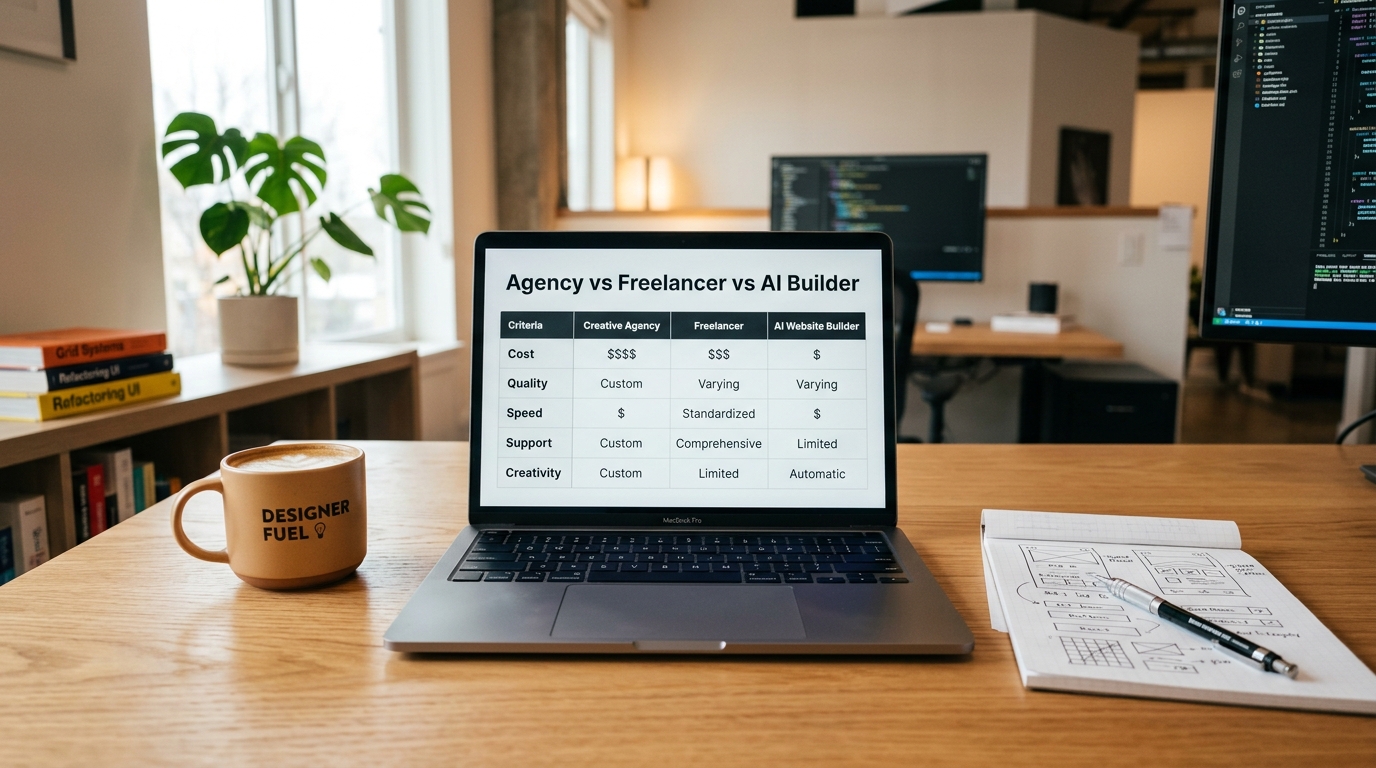
A definitive, transparent teardown comparing AI website generators, solo freelancers, and specialized digital engineering studios on deliverables, speed, security, and enterprise ROI.