Cursor vs Claude Code vs GitHub Copilot: How AI Coding Tools Change Agency Pricing
A technical analysis of agentic coding assistants in professional software studios, exploring repository context indexing, automated refactoring, developer velocity, and commercial agency pricing.
Deconstructing the AI developer stack: how next-generation coding tools accelerate delivery speed and reshape agency economics.
Executive Summary & Key Takeaways
Cursor and Claude Code represent a generational leap beyond first-generation autocompletion tools like traditional GitHub Copilot.
Agentic codebase indexing enables AI assistants to execute multi-file refactors, update database schemas, and resolve complex TypeScript errors autonomously.
Senior developer productivity increases by 35% to 50% on routine boilerplate, API scaffolding, and unit test generation.
Agency pricing impact: Elite development studios deliver enterprise-grade custom web applications in 4 to 8 weeks rather than 4 to 6 months.
Code quality paradox: Junior developers using AI coding tools without architectural oversight frequently generate massive volumes of unmaintainable technical debt.
What to Do About This: Action Checklist
1Evaluate agency proposals based on senior architectural experience rather than billable junior developer headcounts.
2Ensure your software agency maintains strict automated CI/CD testing pipelines to validate AI-assisted code generation.
3Demand full Git repository transparency and rigorous pull request reviews on all contract deliverables.
4Partner with Techsist Labs to build high-performance custom web applications with elite developer velocity via /services/website-development/.
The End of Single-Line Autocomplete: The Agentic Coding Era
In the software engineering sector, the conversation surrounding artificial intelligence has shifted dramatically. Two years ago, tools like GitHub Copilot functioned primarily as glorified tab-autocomplete utilities, suggesting the next three words of a function or drafting simple regex patterns.
In 2026, the industry has crossed into the era of Agentic Code Engineering. Modern AI developer tools (most notably Cursor, Anthropic Claude Code, and enhanced GitHub Copilot Workspace) possess complete semantic understanding of multi-repository codebases. They can inspect compiler error logs, execute terminal shell commands, run test suites, and orchestrate complex architectural refactorings spanning dozens of interconnected files simultaneously.
For commercial business clients and startup founders, this technological leap is reshaping the economics of software development: altering agency quotes, shrinking delivery timelines, and redefining what constitutes elite engineering.
Head-to-Head Architectural Teardown: Cursor vs Claude Code vs GitHub Copilot
1. Cursor (The Full IDE Fork):
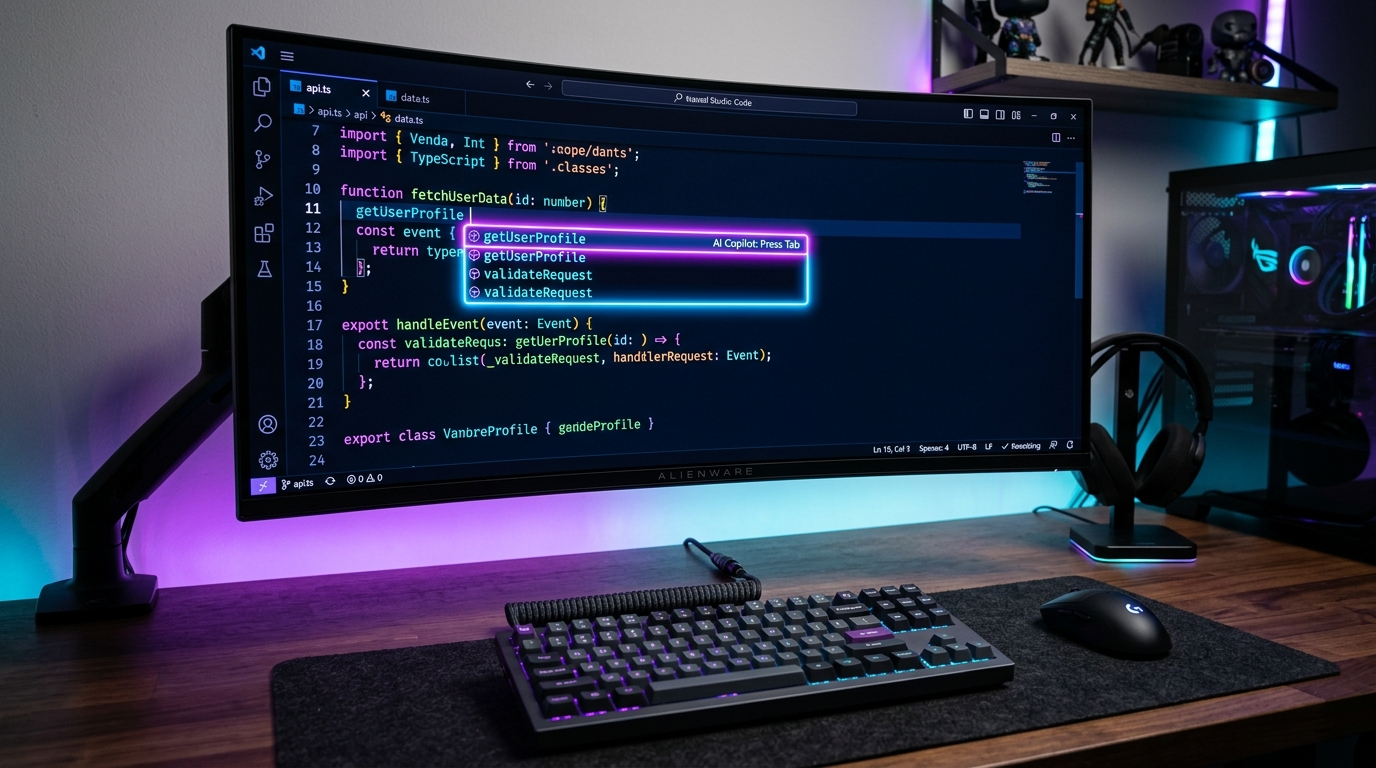
Built as an intelligent fork of VS Code, Cursor represents the current benchmark for interactive full-stack development. Its defining technological advantage is full-repository semantic embedding: Cursor indexes your entire codebase into a local vector database. When a developer types a prompt (e.g., "Add a PayTo payment gateway to our checkout route"), Cursor searches the codebase, identifies the relevant API controllers, frontend form components, and TypeScript interfaces, and presents a multi-file unified diff. Developers can accept, reject, or iterate on code line-by-line with millisecond-level precision.
2. Claude Code (The Agentic Terminal CLI):
Anthropic specialized agentic CLI tool operates directly inside the developer terminal. Unlike graphical IDEs, Claude Code functions as an autonomous command-line engineer. It reads files, writes code, executes git commits, runs local development servers, inspects terminal compiler output, and self-corrects bugs iteratively without human intervention. When tasked with upgrading a large codebase from Next.js 14 to Next.js 16, Claude Code inspects breaking changes, runs type checks, and resolves deprecated API calls across hundreds of files in a single autonomous execution loop.
3. GitHub Copilot (The Enterprise Standard):
Backed by Microsoft and OpenAI, GitHub Copilot remains the enterprise default due to native integration with GitHub Enterprise Cloud and Azure DevOps. While its in-line completions remain solid, its multi-file architectural reasoning and agentic terminal autonomy lag noticeably behind Cursor and Claude Code. However, for heavily regulated enterprises with strict compliance mandates, GitHub Copilot centralized security scanning and IP indemnity protections remain attractive.
AI Coding Assistant Benchmark for Engineering Studios (2026)
Dimension / Feature
Cursor (AI IDE)
Claude Code (Terminal Agent)
GitHub Copilot (Enterprise)
Primary Interface
Custom VS Code fork
Command-line terminal CLI
IDE extension + GitHub web
Repository Context Indexing
Deep local embeddings + vector search
Direct file system exploration
Cloud-based repository indexing
Multi-File Refactoring
Exceptional (Interactive diff viewer)
Superior (Autonomous file edits)
Moderate (Chat-based suggestions)
Terminal Shell Execution
Integrated terminal agent
Full autonomous terminal access
Limited to IDE task runner
Developer Speed Uplift
40% - 60% on complex features
50% - 75% on large migrations
20% - 35% on daily coding
Underlying Foundation Models
Claude 3.7 Sonnet / GPT-4o
Claude 3.7 Sonnet (Thinking mode)
OpenAI custom enterprise models
How Modern AI Coding Tools Are Changing Agency Pricing
For businesses commissioning custom websites or software applications, the adoption of AI coding assistants by elite digital studios is completely upending commercial agency models:
1. Compressed Timelines: Custom web application builds that previously required 16 to 24 weeks of engineering can now be delivered in 6 to 10 weeks, slashing time-to-market for digital startups.
2. Fixed-Price Value Bidding: The traditional billable-hour model is collapsing. Agencies billing by the hour are penalized for using AI tools that allow senior engineers to work 3x faster. High-tier agencies (such as Techsist Labs) price projects based on commercial outcomes, architectural performance guarantees, and deliverables rather than inflated hourly timesheets.
3. Reallocation to Architecture and UX: Because engineers spend far less time writing repetitive CRUD boilerplate code, agencies can allocate more intellectual horsepower to conversion rate optimization, high-fidelity UI animations, cybersecurity hardening, and end-to-end integration testing.
The Engineering Quality Gate: Why Senior Oversight Matters More Than Ever
Generative AI tools make competent developers fast, but they make incompetent developers dangerous. When an untrained developer prompts an AI to "build an authentication system", the AI will produce code that appears to function on localhost, yet lacks CSRF protections, rate limiting, and SQL injection sanitization.
Elite agencies enforce rigorous quality gates:
- Mandatory TypeScript Strict Mode: Every generated line must pass strict type checking.
- Comprehensive Automated Test Suites: Requiring 90%+ unit and integration test coverage (Jest, Vitest, Playwright) to guarantee regression stability.
- Senior Human Peer Review: Every pull request must be scrutinized by a Principal Architect before deployment to production.
Business Implications & ROI Analysis
Commercial Opportunities
•Agencies leveraging modern AI developer tools deliver complex custom software at half the traditional development timeline.
•Software updates and framework migrations that once cost tens of thousands can be executed rapidly with automated agentic tooling.
•Clients benefit from more thoroughly tested codebases through automated test generation.
Risks & Limitations
•Hiring budget contractors who generate entire codebases with AI without architectural review creates unmaintainable software debt.
•Unvetted AI-generated code can introduce subtle security flaws or intellectual property licensing contamination.
•Agencies that fail to adopt modern AI tooling will become commercially uncompetitive and overcharge on legacy hourly billing.
Recommended Next Steps for Business Leaders
Ask prospective agency partners how they utilize AI in their development workflow and how they enforce code review standards.
Insist on fixed-price milestone contracts rather than open-ended hourly billing for custom development projects.
Ensure your development contracts guarantee 100% intellectual property ownership and complete repository access.
Need Expert Help with Website Development?
From custom Next.js engineering and AI automation to high-performance search optimization, Techsist Labs partners with ambitious businesses worldwide to build solutions that scale revenue.
The rise of autonomous buyer agents: how machine-to-machine commerce, programmatic product feeds, and headless checkout APIs are replacing traditional consumer browsing behavior.
A hands-on review of the native generative AI features in Xero (Just Ask Xero / JAX) and MYOB: bank feed reconciliation accuracy, automated GST coding, and where human bookkeepers remain essential.
A financial decision framework for business executives: calculating total cost of ownership (TCO), break-even timelines, and strategic risks between buying commercial SaaS versus building custom AI pipelines.